Perspectives on sovereign AI, silicon-rooted identity, component-level provenance, counterfeit detection, and the trust layer beneath AI infrastructure.
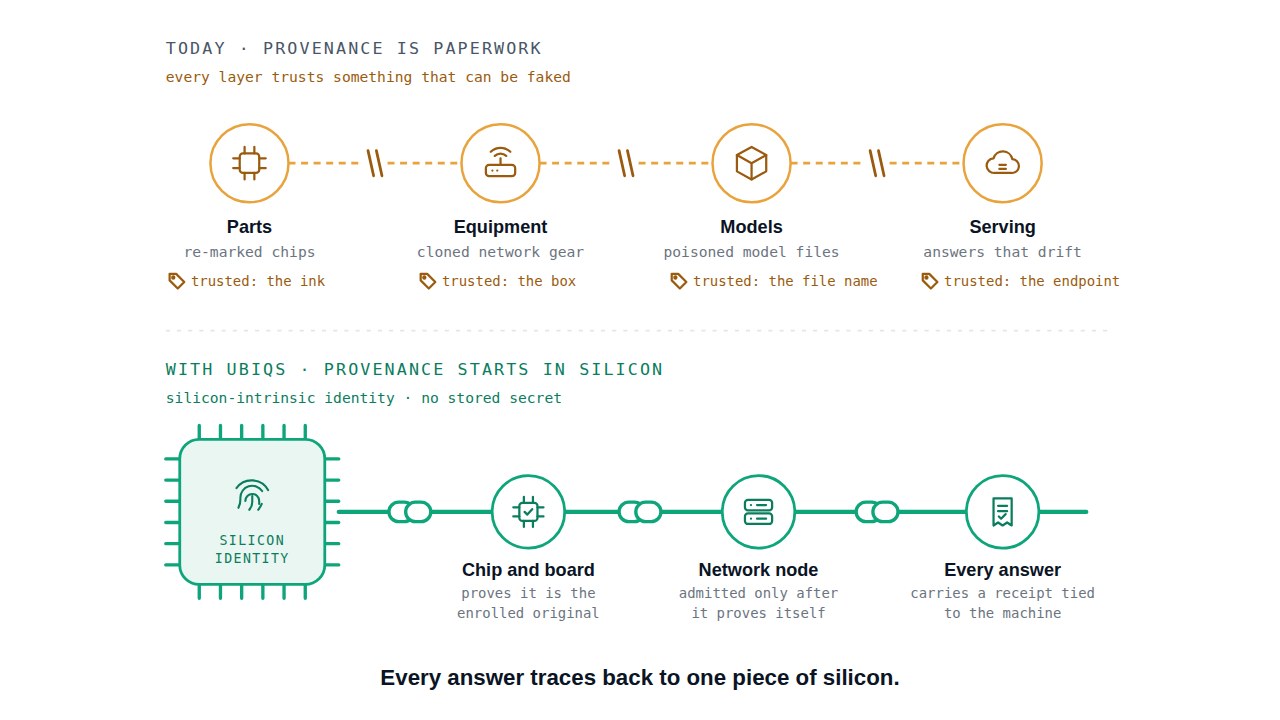
Re-marked chips, cloned network gear, poisoned model files and drifting AI endpoints share one flaw: nothing proves where they came from. Why provenance has to start in the silicon and run to every AI answer.
Every answer traces back to one piece of silicon.
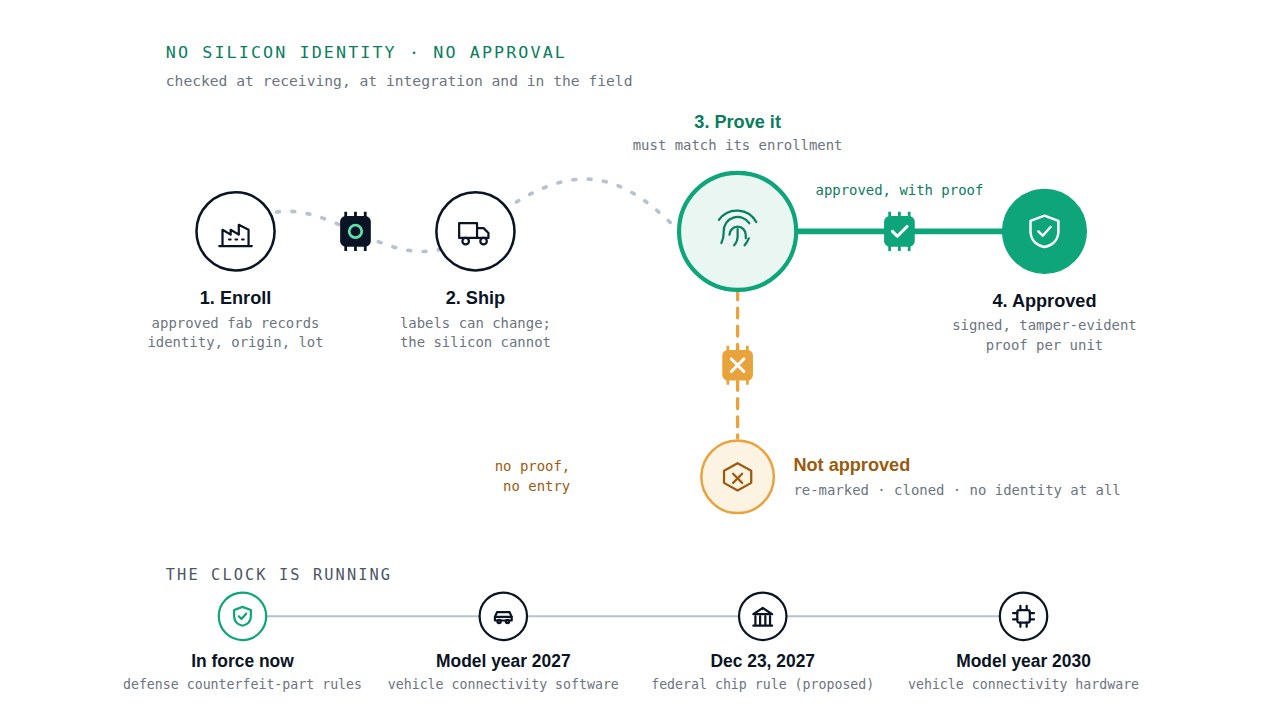
Read →Federal buyers and automakers face fixed deadlines to keep restricted chips out of their products, yet compliance still rests on supplier signatures. Flip the question from "is this banned?" to "can this part prove it is approved?"
A banned part does not need to be recognized. It simply cannot produce the proof.
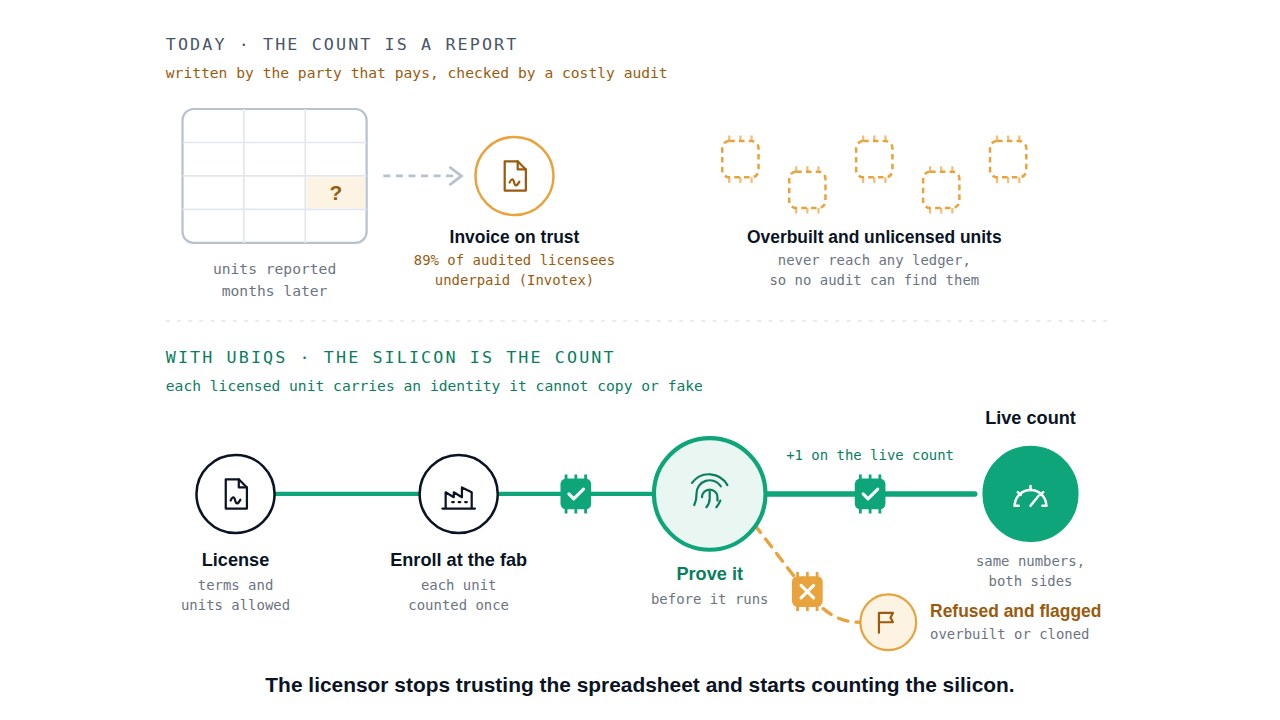
Read →Licensors get paid on counts the licensee reports, months later. Audits find most licensees underpay, and overbuilt chips never reach any ledger. What changes when every licensed unit carries an identity it cannot copy or fake.
Stop trusting the spreadsheet. Count the silicon.
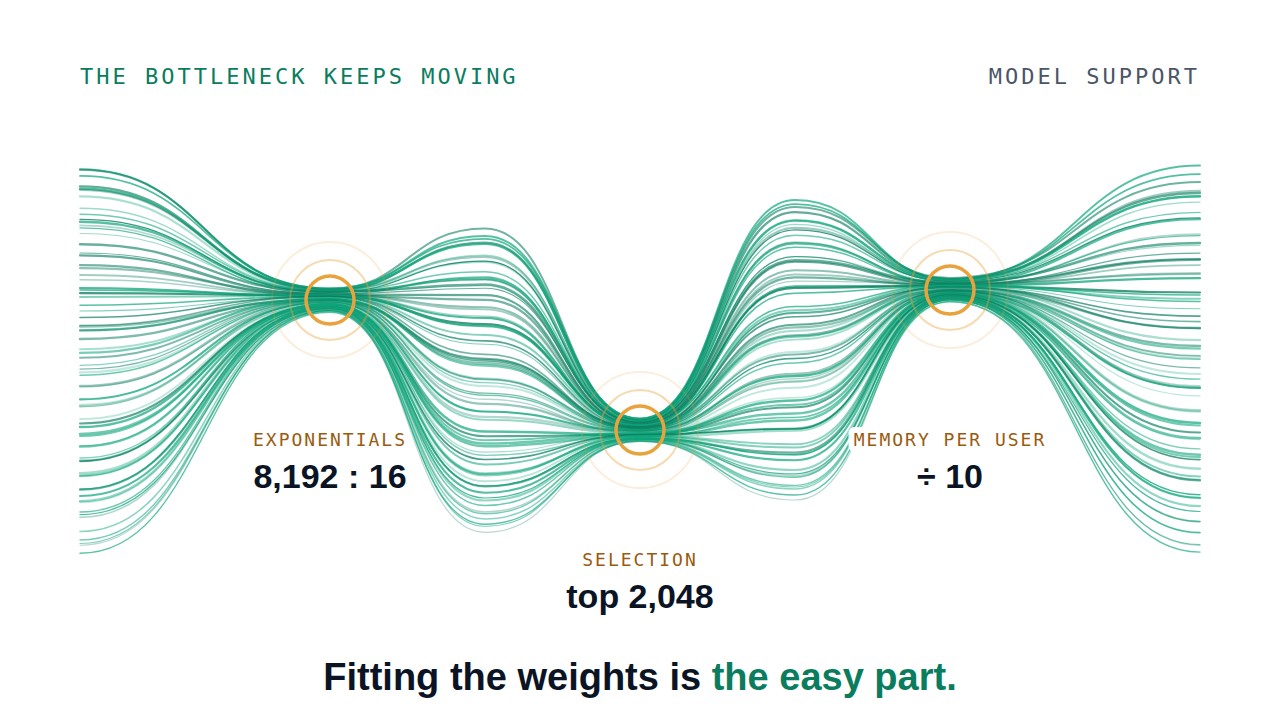
Read →Every model generation moves the bottleneck: the exponential behind softmax, selection steps, scans, expert routing and a thirty-fold spread in memory per user. What a compiler can fix after tape-out, and what it cannot.
Fitting the weights is the easy part.
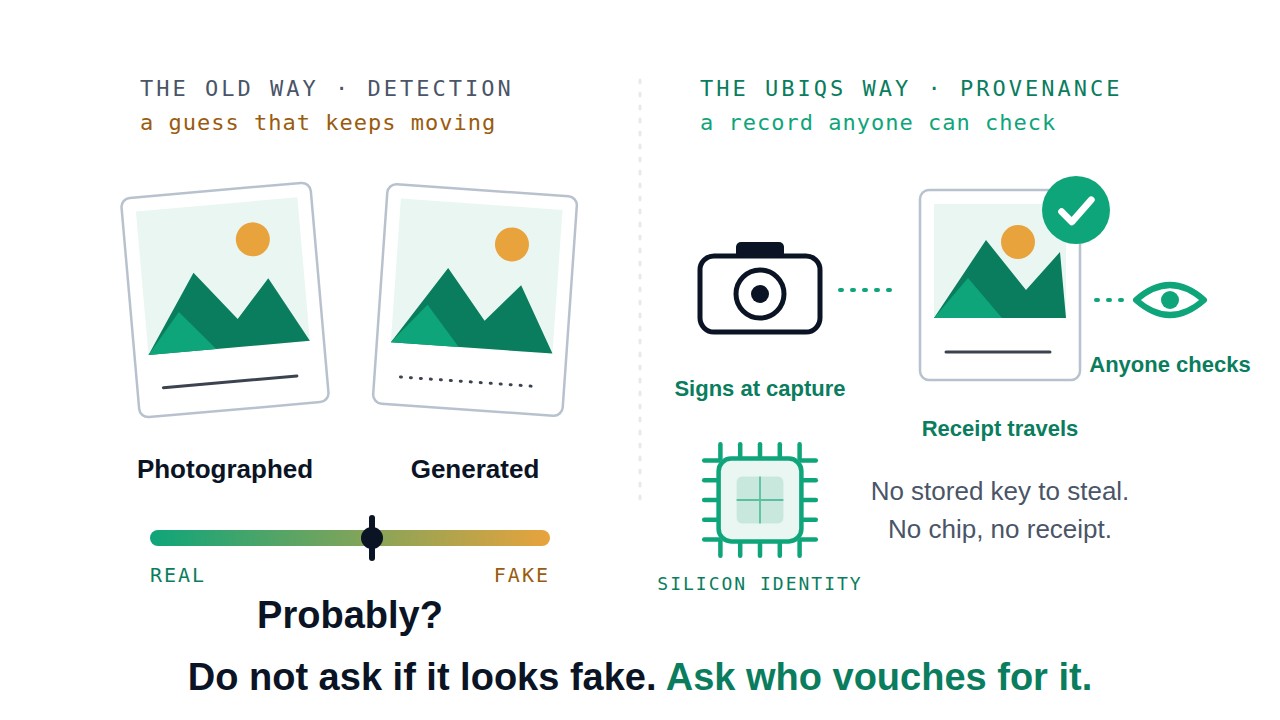
Read →AI image detectors give a probability, never a record. Provenance signs the image at capture with a key derived from the chip's own silicon, so anyone can check which device made it. How that compares with Apple's Reference Image.
Do not ask whether it looks fake. Ask who vouches for it.
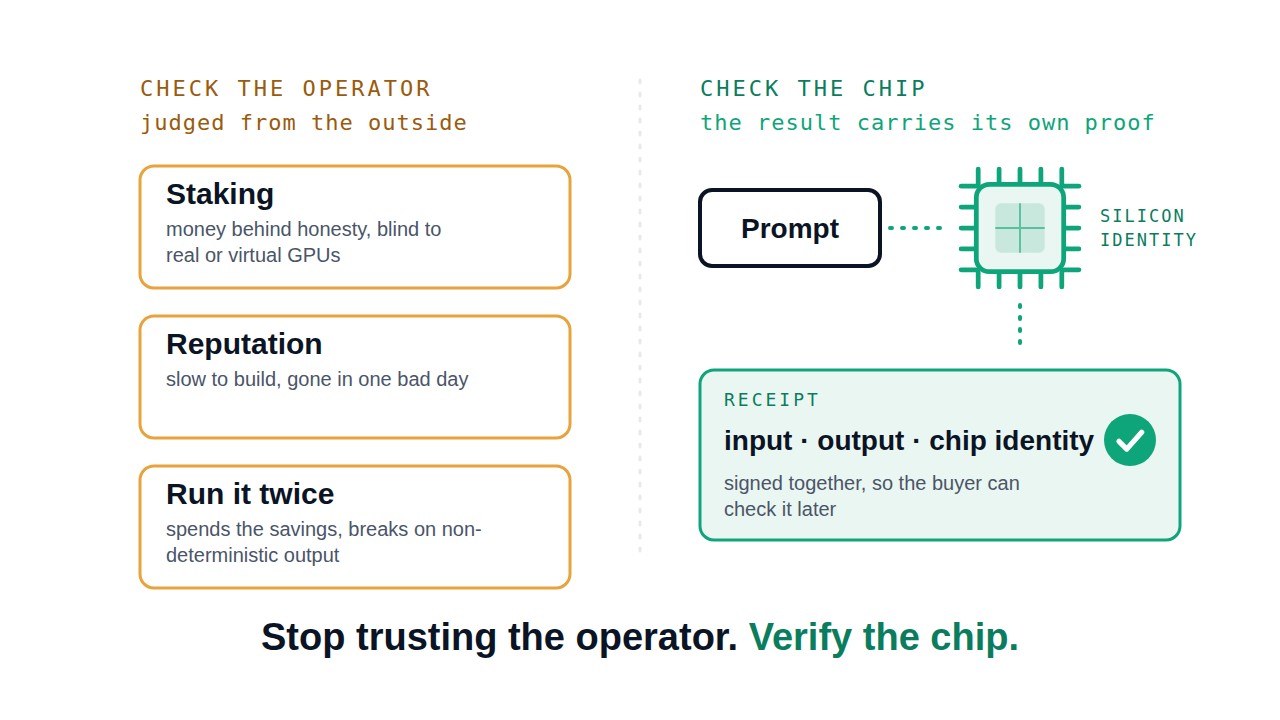
Read →Staking, reputation and redundant execution all judge the operator from the outside. A receipt that binds input, output and chip identity lets a buyer check the result instead of hoping.
Stop trusting the operator. Verify the chip.
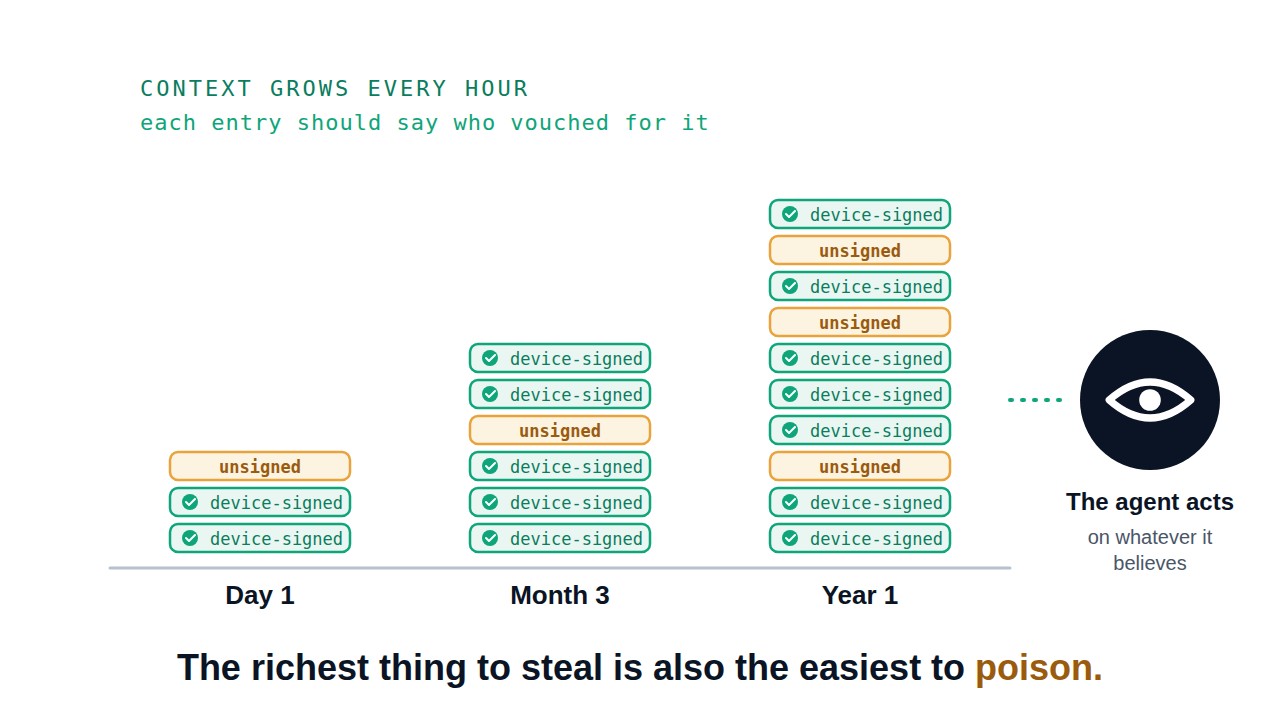
Read →Ambient agents build a picture of a person or a place over months. That growing context is their most valuable asset and their easiest point of attack. Why every piece of it should say where it came from.
The richest thing to steal is also the easiest to poison.
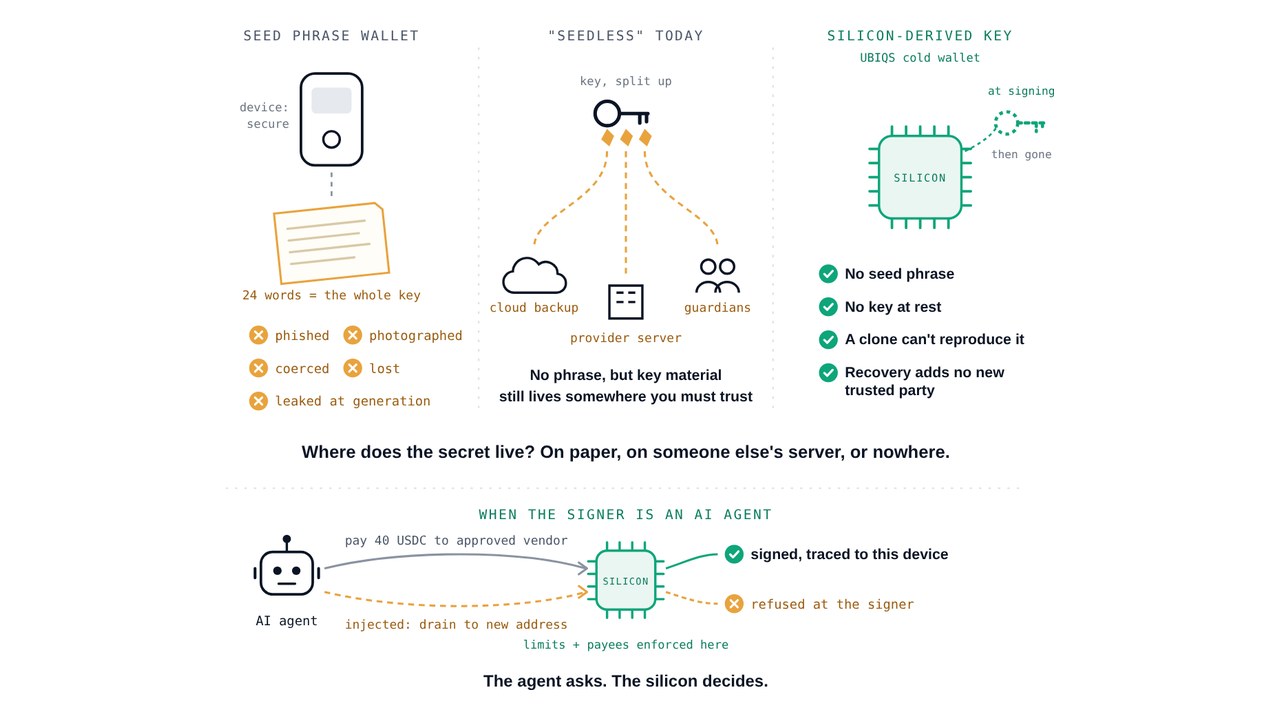
Read →Self-custody fails at the seed phrase, and AI agents that move money can't hold one at all, so their keys end up hot. What changes when the key comes from the silicon, is never stored, and the spending rules sit below anything an agent can be talked into.
The agent asks. The silicon decides.
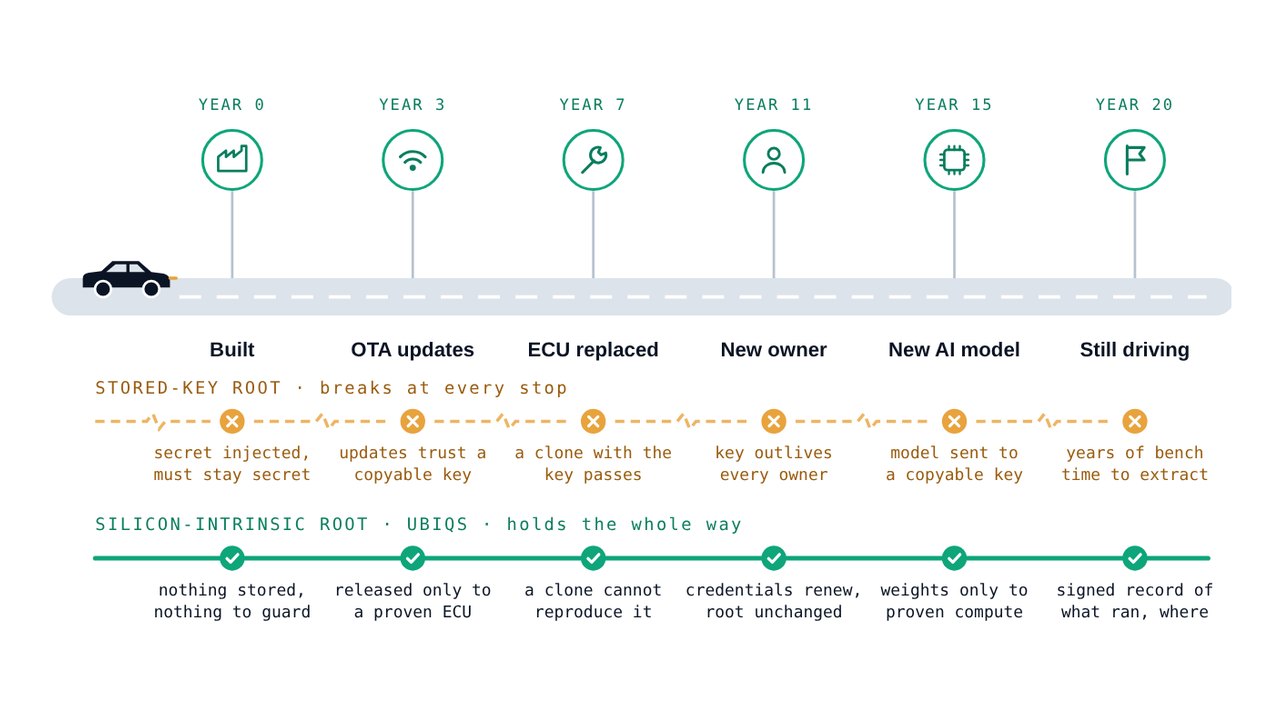
Read →The quantum clock is one threat across a vehicle's 20-year life. Parts swapped in service, over-the-air updates, new owners and AI model updates all lean on the same root of trust. Why a stored key is the wrong foundation for every one of them.
A vehicle's root of trust is chosen in seconds on the line and has to hold for twenty years in the hands of strangers. It should not depend on a secret staying secret for that long.
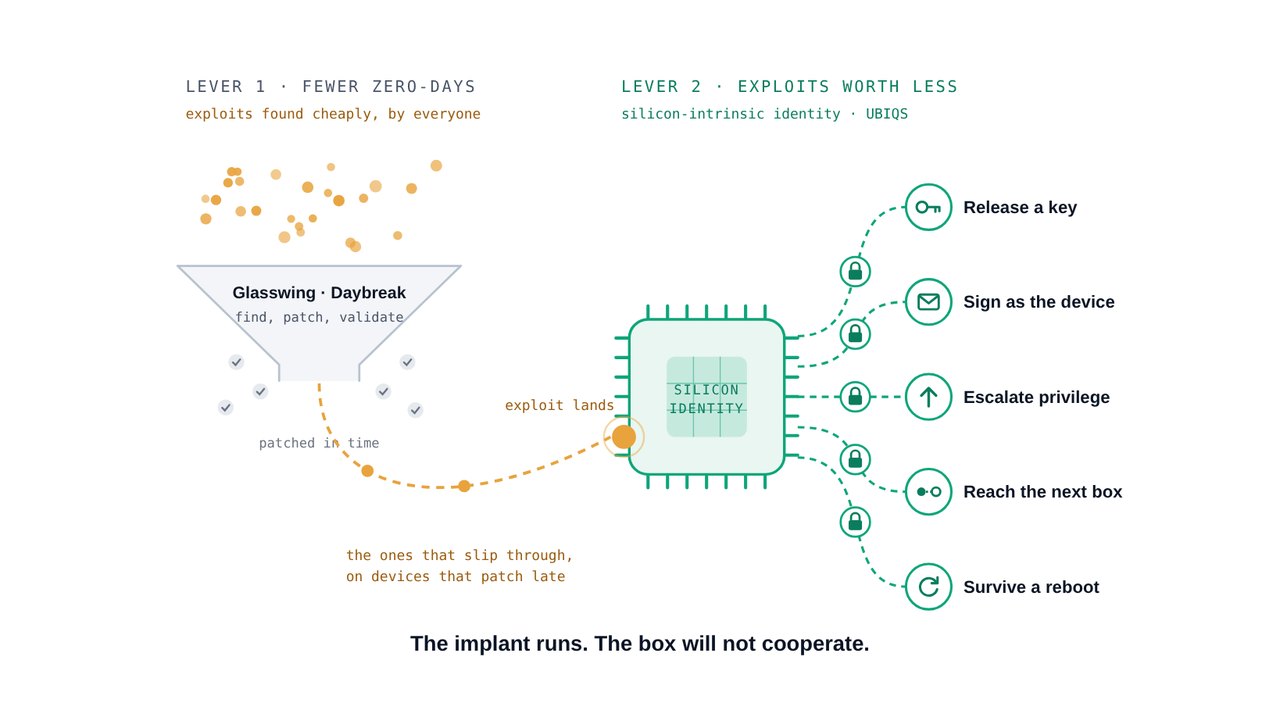
Read →Frontier AI has made finding exploits cheap for defenders and adversaries alike. Project Glasswing and OpenAI Daybreak shrink the number of exploitable zero-days. Silicon-intrinsic identity shrinks what each remaining exploit is worth, on the devices that will never win a patch race.
The breach happens; the payoff does not.
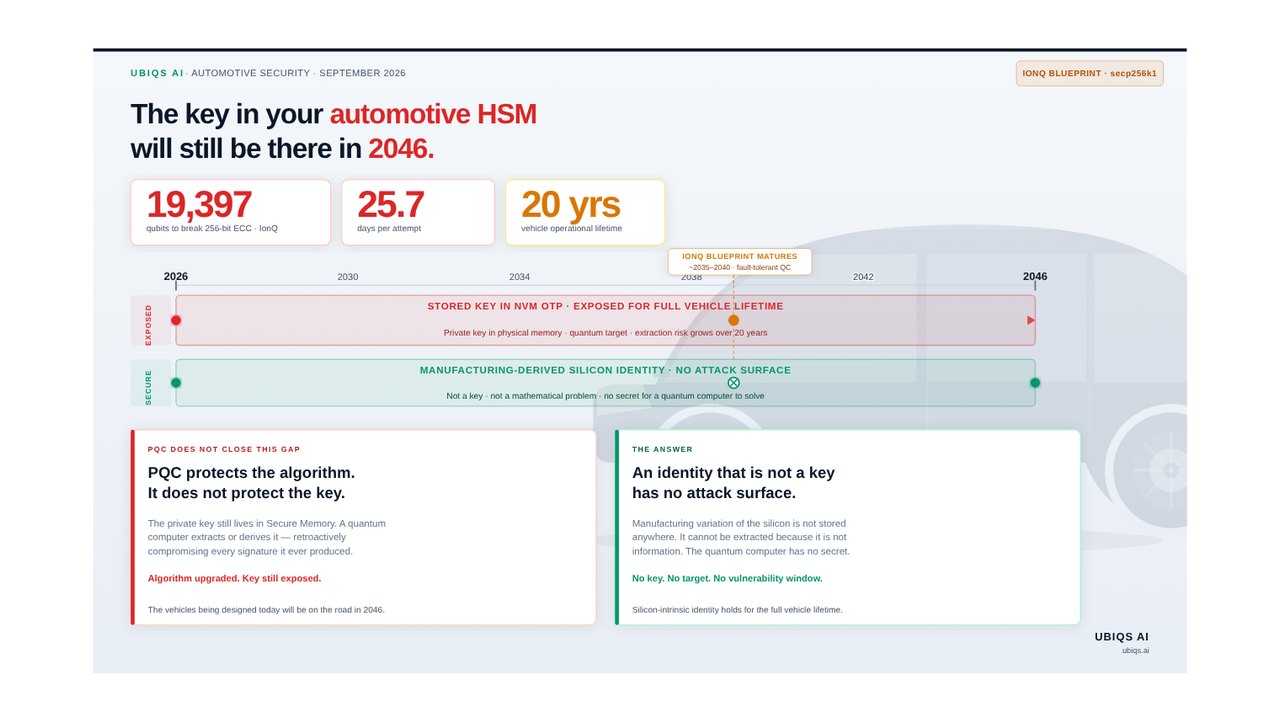
Read →IonQ published a full-stack engineering blueprint for breaking 256-bit elliptic curve cryptography. The private keys provisioned into automotive HSMs today will still be there when the threat matures.
The IonQ blueprint is a countdown clock with a known engineering specification. The transition to manufacturing-derived silicon identity needs to happen before the vehicle architecture is locked, not after the blueprint for attacking the alternative has been published.
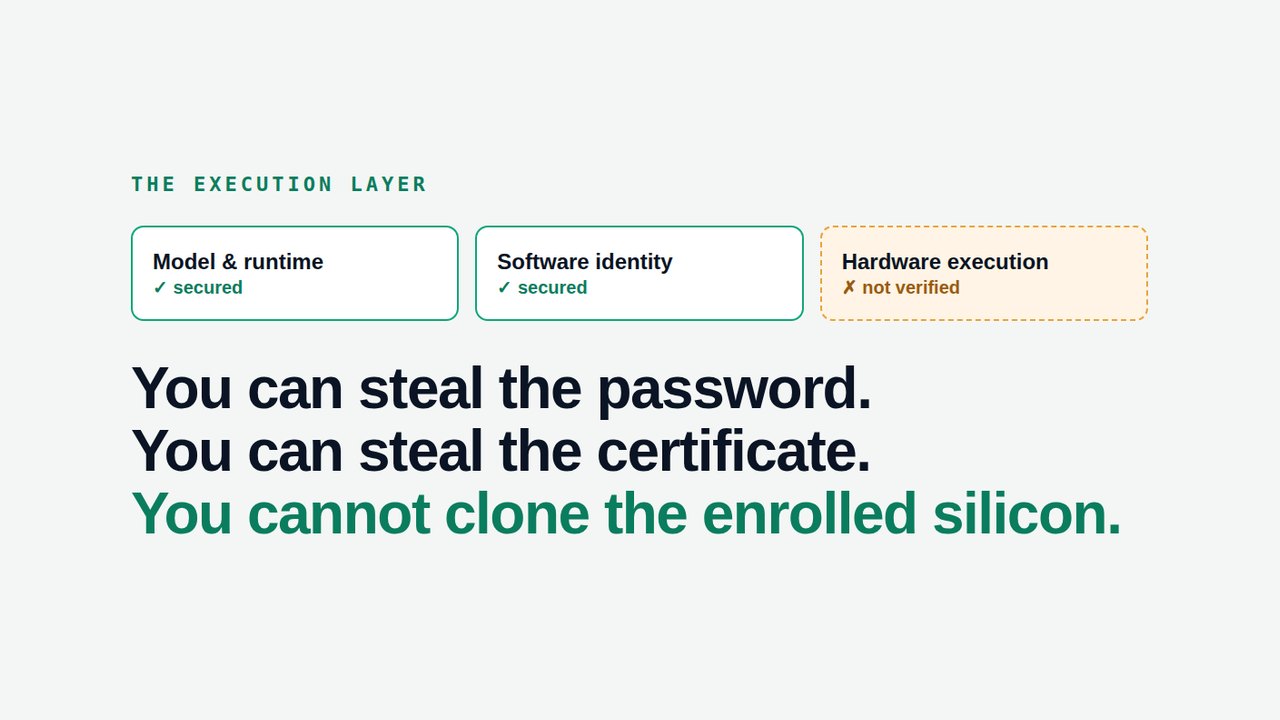
Read →Every security solution this week operates above the execution layer. HiddenLayer, Entra Agent ID, the IDScan breach: each story leaves the same layer untouched.
You can steal the password. You can steal the certificate. You cannot clone the enrolled silicon.
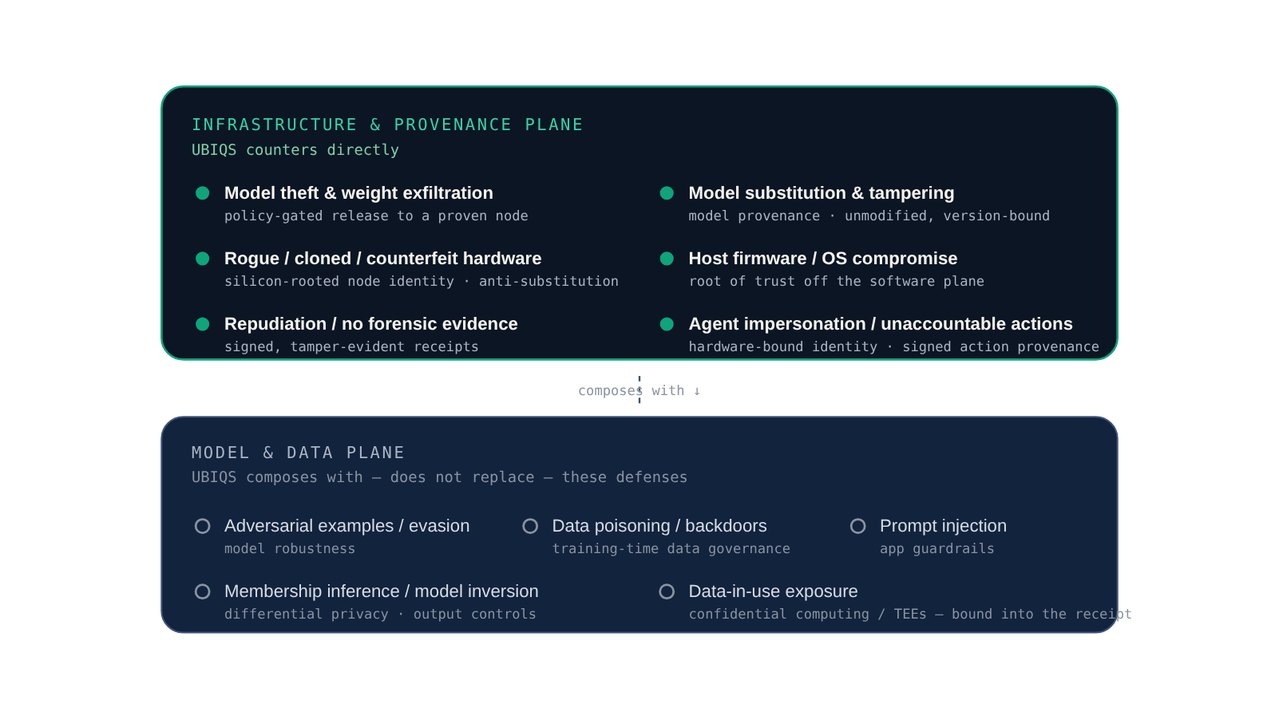
Read →The ML attack surface spans the model, the data, and the infrastructure. Hardware-rooted identity shuts down a whole class of infrastructure and provenance attacks, model theft, substitution, rogue hardware, repudiation, and composes with model-level defenses for the rest.
Most infrastructure-plane ML attacks reduce to one of two claims being false: "this is the approved machine," or "this is the approved model, unchanged." UBIQS makes both provable.
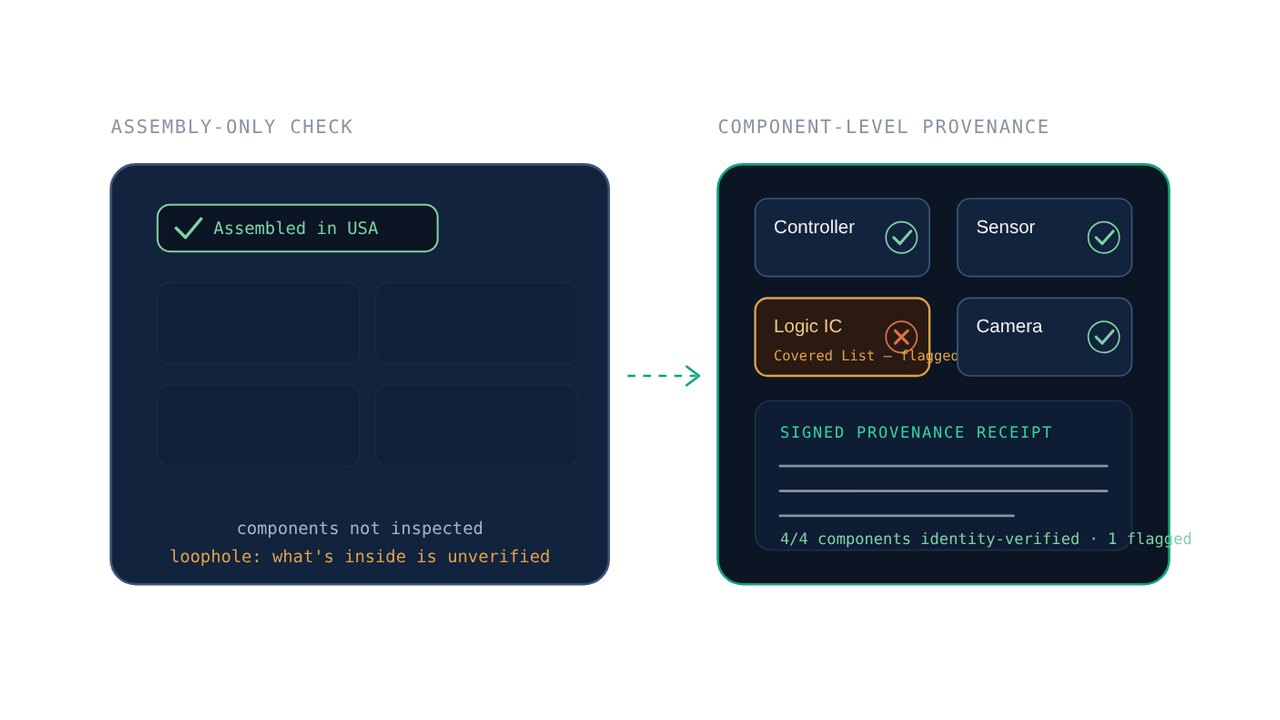
Read →The FCC just closed the "component part loophole." Verifying where a device was assembled no longer proves it's clean: a logic-bearing part from a Covered List entity can hide inside an otherwise US-built device. Proving genuineness component by component is a harder, and more important, problem.
Final assembly location is one bit of information. The regulation is now asking a question with many more bits: is every logic-bearing component in this device genuine, and where did it come from?
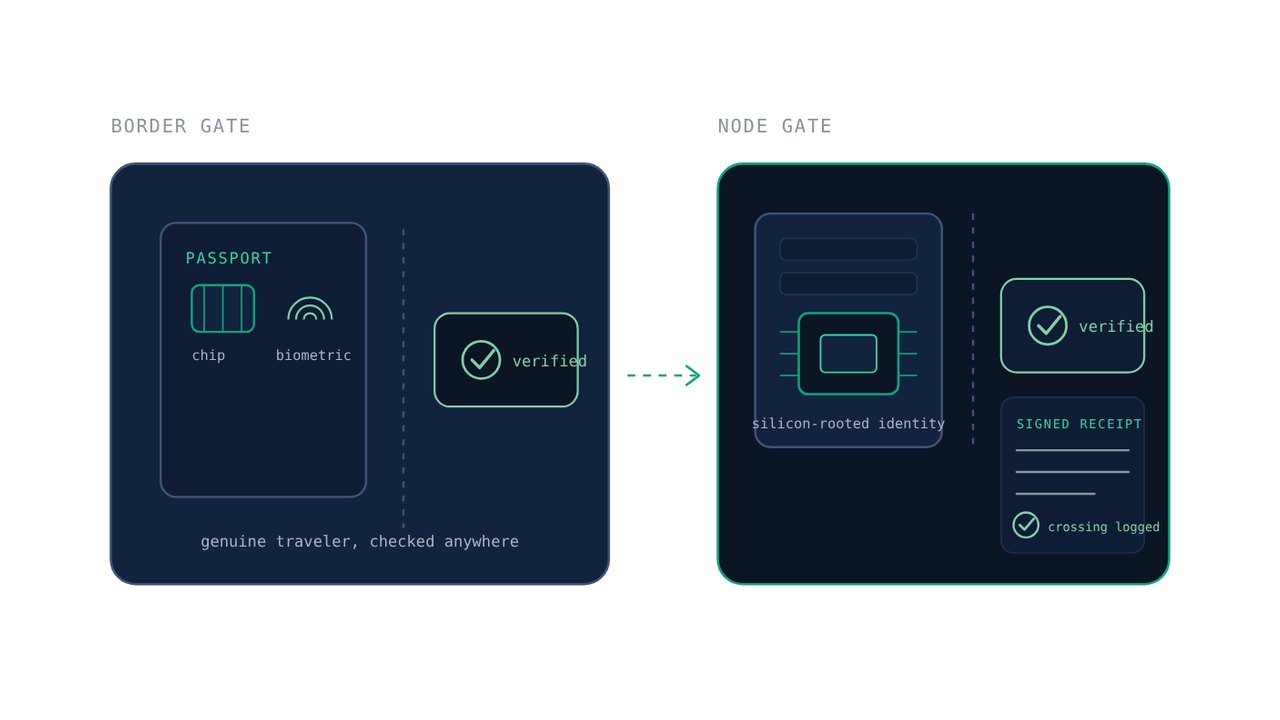
Read →Border control solved impostor identity with a chip that can't be forged and can be checked anywhere. AI infrastructure faces the same question at every node, and needs the same kind of answer.
A passport proves who you are at the gate. What sovereign AI needs is proof of who ran what, on which physical machine, that still holds after the gate is behind you.
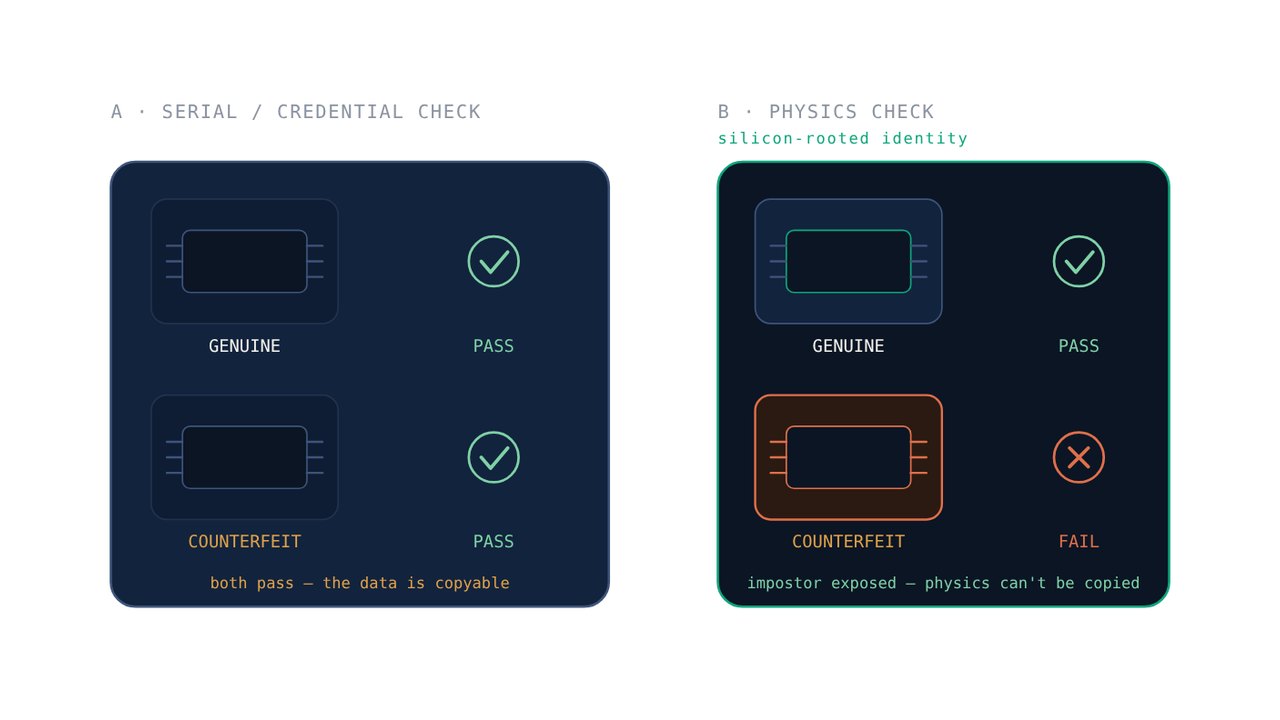
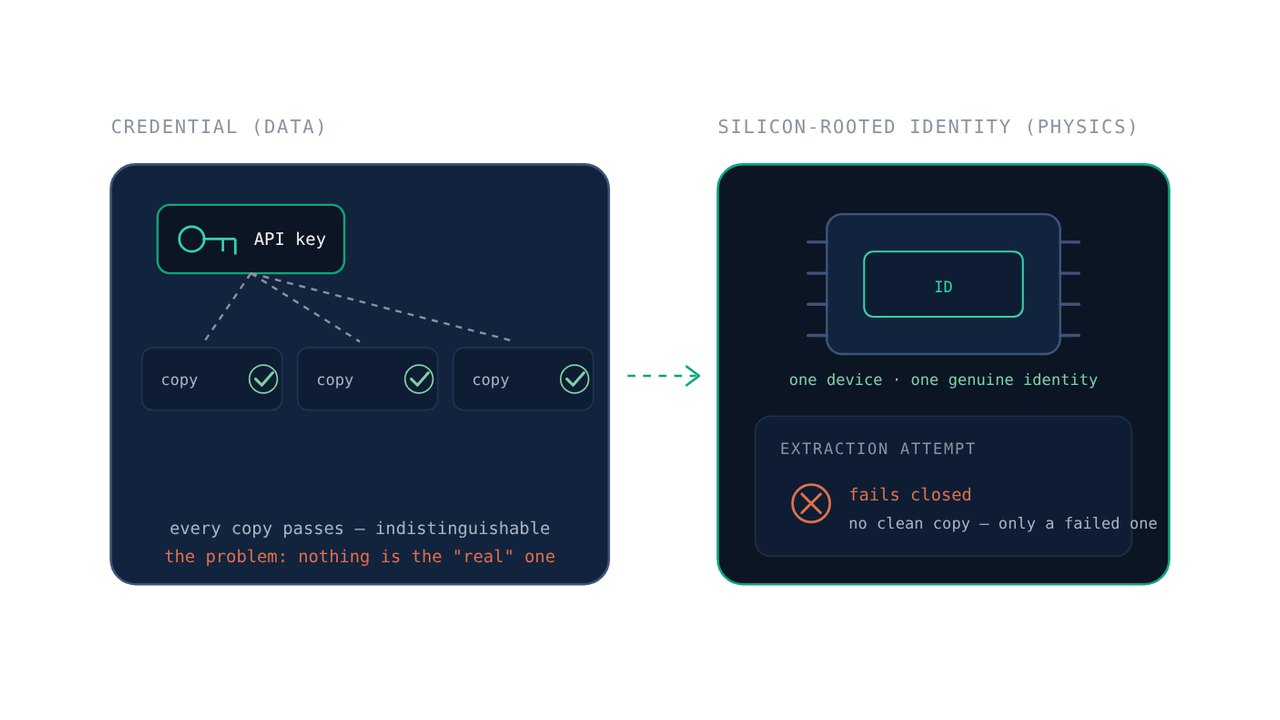
Read →A cloned credential and a counterfeit chip look identical to software. When identity comes from the physics of the specific device, a genuine machine and an impostor stop looking the same.
A serial number answers "does this device claim to be genuine?" A physics-rooted identity answers a harder and more useful question: "is this the specific genuine device, and not a copy of one?"
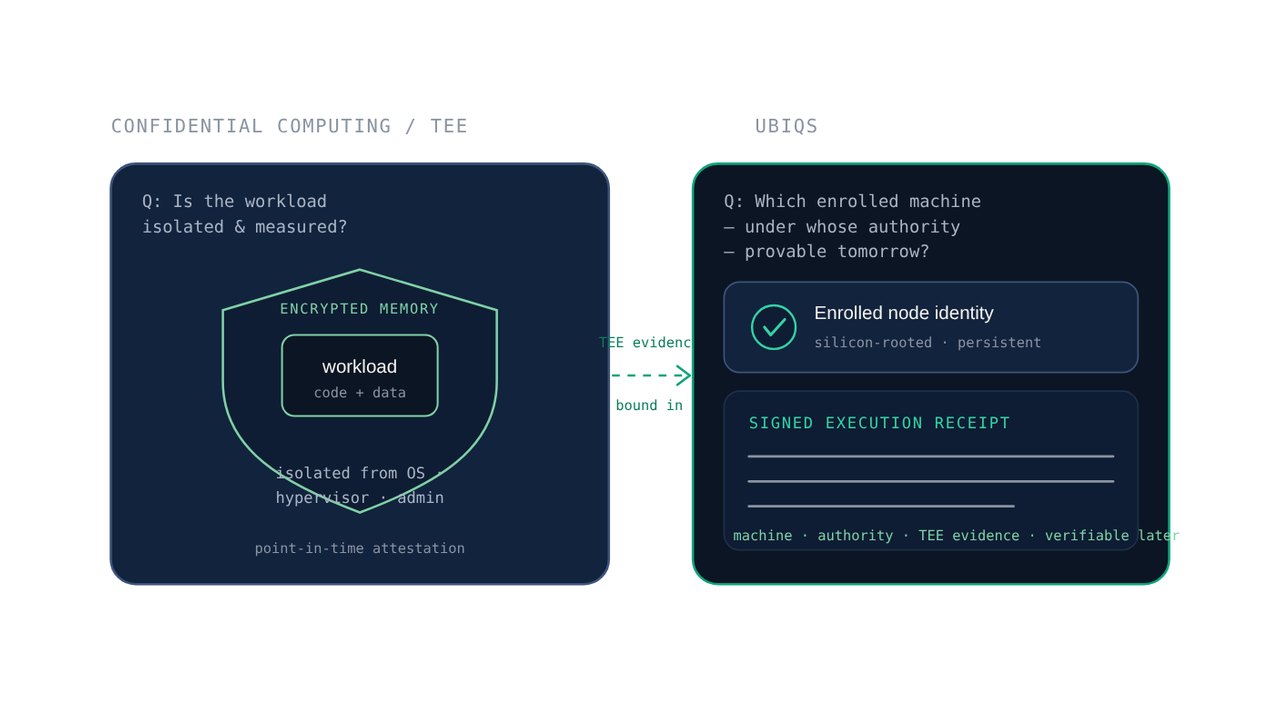
Read →Confidential computing protects what runs, in memory, while it runs. It doesn't prove which enrolled machine ran it, under whose authority, or hold evidence you can check tomorrow. That's a different layer, and UBIQS composes with it.
A TEE proves a workload was isolated. It doesn't prove which enrolled machine is accountable for it, under whose authority, in a form you can verify again tomorrow. Those are different questions, and both deserve a real answer.
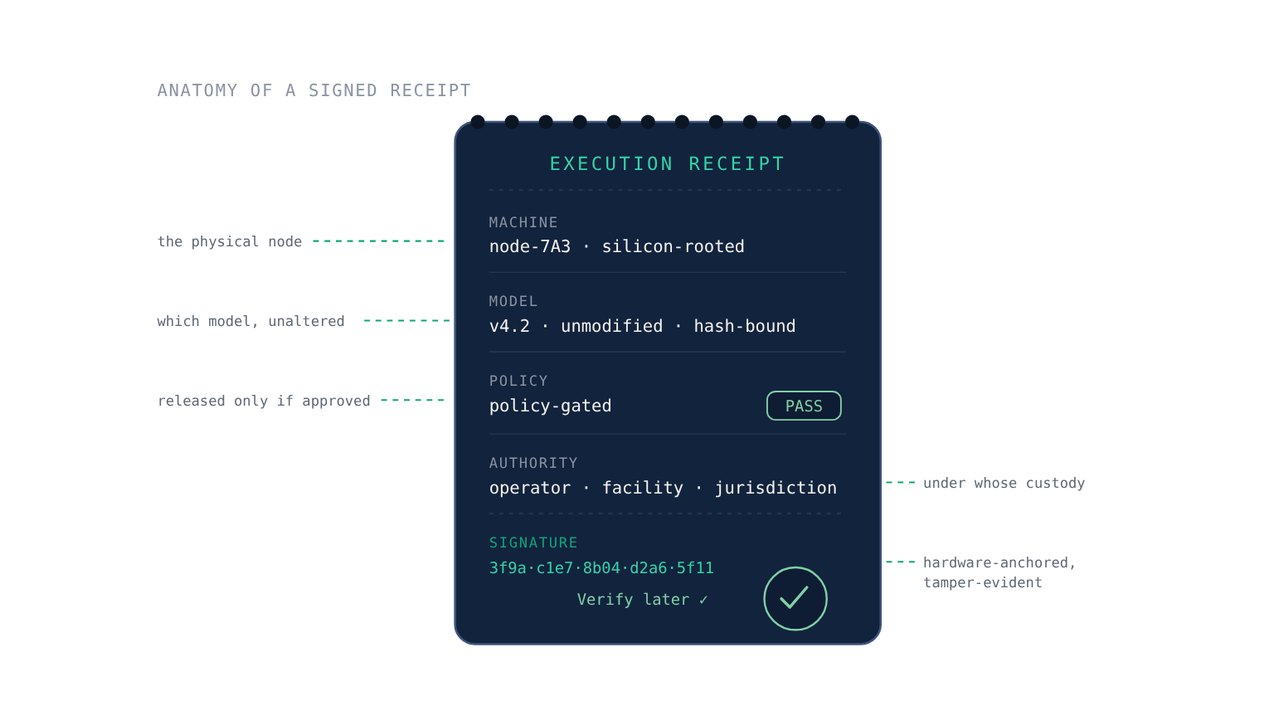
Read →The portable, tamper-evident record that ties the physical node, the model, and the policy to a result, and turns "trust us" into evidence an auditor can verify long after the job is gone.
A log is something you have to trust. A signed receipt is something you can check. The whole point is to stop depending on the good faith and continued existence of the party that ran the job.
Read →Certificates, API keys, and tokens are data, and data gets copied, extracted, and replayed. Why the only machine identity that holds under pressure is one derived from physics, not assigned by an authority.
An identity you can steal was never really an identity: it was a password with better branding. The only identity worth the name is one there is no copy of to take.
Read →We're talking with design partners, technical collaborators, and investors working on sovereign AI and verifiable infrastructure.